Most “best free zone for e-commerce” comparisons stop at the licence: which zone lets you sell online, how much the trade licence costs, how many visas you get. That question misses the part that actually determines whether a seller can move stock fast enough to compete — does the free zone have real e-commerce fulfillment infrastructure, or just a licence category with the word “e-commerce” in it.
Only a handful of UAE free zones operate warehousing, pick-pack-ship, and last-mile delivery inside the zone itself. This comparison looks at the three that do it differently: Dubai CommerCity in Umm Al Quwain, the only free zone in the region built exclusively for digital commerce; EZDubai, the e-commerce district inside Dubai South’s logistics zone; and JAFZA, the port-anchored free zone that hosts the region’s largest 3PL cluster. All three can issue an e-commerce trade licence. Only one of them is the reason Amazon put an e-commerce fulfillment centre in the UAE at all.
What “Built for E-Commerce Fulfillment” Actually Means
A free zone built for e-commerce fulfillment needs three things a generic e-commerce licence does not guarantee: warehouse or fulfillment-centre space physically inside or adjacent to the zone, a bonded customs status that lets stock move in and out without paying duty and VAT at every touchpoint, and fast physical access to a port or cargo airport so imported inventory reaches the fulfillment floor in hours, not days. Judge each zone on those three points, not on the licence fee alone.
Dubai CommerCity — The Only Free Zone Built Only for Digital Commerce
Dubai CommerCity, on Emirates Road in Umm Al Quwain, is described by its own operator as the first free zone in the Middle East, Africa and South Asia region dedicated exclusively to digital commerce. It is organised into three linked clusters: a Business Cluster for corporate offices, a Logistics Cluster for warehousing and e-commerce fulfillment, and a Social Cluster for the retail and hospitality support that comes with a working campus. Tenants include eBay, Aramex, the fulfillment operator Arvato, and dubizzle’s parent Bayut — a tenant mix skewed toward companies whose entire business is moving online orders, not general trading.
Because the zone is single-purpose, the licence itself is narrower than a general trading licence: it covers online retail, marketplace selling, fulfillment services, and the digital-marketing and content activities that support them, and it explicitly excludes manufacturing and heavy industry. The entry-level Smart Desk package runs AED 28,945 for Year 1, including government registration and licence fees, and carries two visa slots; additional visas run AED 3,500–7,000 each including Emirates ID and medical testing. That is a higher entry price than a bare-bones trading licence elsewhere, but it buys warehousing, third-party e-commerce fulfillment options, and last-mile delivery already built into the campus rather than sourced separately.
EZDubai at Dubai South — E-Commerce Fulfillment Next to the Runway
EZDubai is not a standalone free zone; it is a dedicated e-commerce district inside Dubai South’s 920,000-square-metre Logistics District, sitting adjacent to the cargo terminals at Al Maktoum International Airport (DWC) and connected to Jebel Ali Port through a bonded logistics corridor. The pitch is speed: a consignment cleared at DWC can be inside an EZDubai e-commerce fulfillment facility within hours of the aircraft landing, which matters for sellers running fast-moving or seasonal stock.
This is also the zone with a live proof point rather than a marketing claim. Amazon opened a fulfillment centre in Dubai South in March 2023 — a 350,000-plus-square-foot facility with roughly 2.1 million cubic feet of storage capacity, five floors, and close to three kilometres of internal conveyance equipment, which lifted Amazon’s UAE storage capacity by 70%. That is not an EZDubai-branded facility, but it sits in the same Logistics District and demonstrates the district can host e-commerce fulfillment operations at a scale most free zones never approach. On cost, Dubai South advertises e-commerce trade licences starting from AED 12,500, though a seller who needs dedicated warehouse space rather than a flexi-desk should expect that figure to rise well beyond the base licence fee — not every EZDubai company needs its own warehouse, since the district also supports handing e-commerce fulfillment entirely to a third-party operator on-site.
JAFZA — The Bonded Warehousing Heavyweight
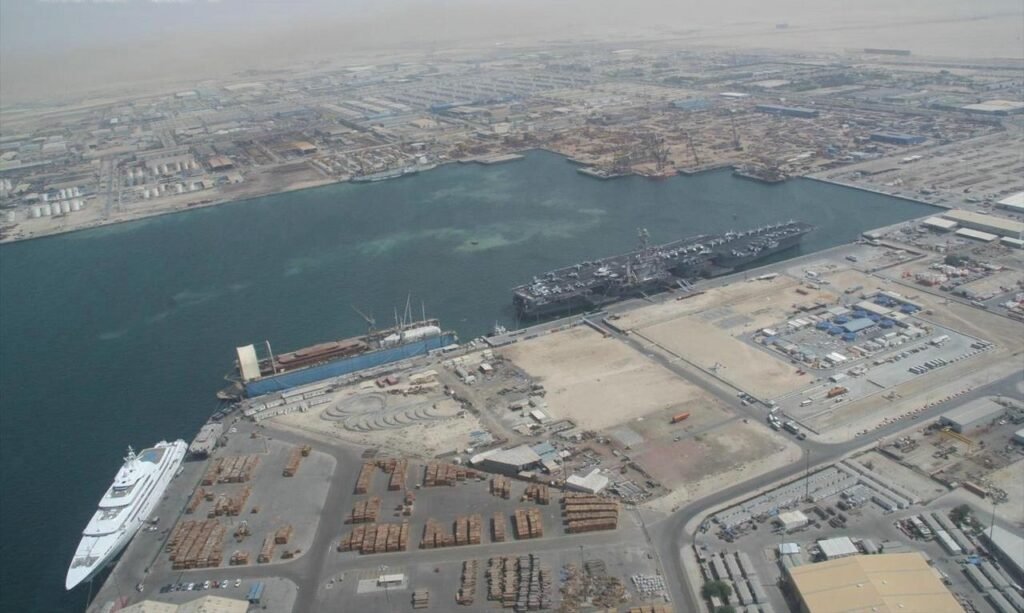
JAFZA is not an e-commerce-exclusive zone — it is the UAE’s largest general free zone, built around Jebel Ali Port — but it carries the deepest bonded-warehousing base of the three by a wide margin. Warehouses inside JAFZA are treated as being outside UAE customs territory, so goods can be imported, stored and re-exported without triggering import duty or 5% VAT until they actually enter the mainland market. Standard warehouse leases run roughly AED 80–180 per square metre per year depending on ceiling height, dock-leveller access and proximity to the port gate, with most units let at a 1,000 sqm minimum (smaller light-industrial units from around 500 sqm exist but are limited). Trade licences run AED 5,500–15,000 for Year 1 across seven licence categories, plus a one-time AED 5,000 registration fee; JAFZA does not publish a bundled package price, so full setup quotes (licence, facility and visas together) range from roughly AED 28,600 for a flexi-desk and two visas up to AED 110,000 for a warehouse-plus-ten-visa setup.
The zone’s e-commerce logistics capability comes from its 3PL cluster rather than a dedicated e-commerce district — operators such as Gallega Global Logistics run large multi-user hubs inside JAFZA (a recent addition added 215,000 square feet of 3PL capacity), offering storage, pick-pack-ship and last-mile handover as a contracted e-commerce fulfillment service rather than requiring the seller to lease and run a warehouse directly. For how JAFZA compares against Dubai South and DAFZA on general logistics and import-export rather than e-commerce specifically, see our Dubai South vs JAFZA vs DAFZA logistics comparison. Actual warehouse lease rates across all three UAE hubs are broken down in our free zone warehouse cost guide.
Side-by-Side: E-Commerce Fulfillment Infrastructure Compared
| Zone | Zone type | Year 1 cost (from) | E-commerce fulfillment infrastructure | Port/airport access | Best fit |
|---|---|---|---|---|---|
| Dubai CommerCity | E-commerce-exclusive free zone | AED 28,945 (Smart Desk, 2 visas) | In-zone warehousing, 3rd-party e-commerce fulfillment, last-mile — purpose-built | Emirates Road, Umm Al Quwain; not port/airport-adjacent | Digital-only brands wanting fulfillment and marketplace ops under one roof |
| EZDubai (Dubai South) | E-commerce district inside a logistics free zone | From AED 12,500 (licence only; warehouse space extra) | Bonded corridor to Jebel Ali Port; Amazon-scale e-commerce fulfillment proven in the same district | Adjacent to Al Maktoum Airport (DWC) cargo terminals | Sellers who need air-freight speed and import volume at scale |
| JAFZA | General free zone, largest 3PL cluster | AED 5,500–15,000 licence + AED 5,000 registration (facility extra) | Bonded warehousing via contracted 3PL operators; largest capacity of the three | Inside Jebel Ali Port, the region’s largest container port | Sellers holding high stock volumes who want sea-freight bonded storage |
Which Zone Fits Which Kind of Seller
Our take: a seller whose entire operation is digital-commerce — a marketplace brand, a D2C store, or an e-commerce fulfillment-services company itself — gets the most from Dubai CommerCity, because the zone’s licence scope, tenant network and physical campus are all built around that one activity, at the cost of a higher Year 1 entry fee and no direct port or airport adjacency. A seller importing high-turnover stock by air, especially anything time-sensitive or seasonal, is better served by EZDubai’s position next to DWC’s cargo terminals and the bonded corridor to Jebel Ali Port — the lower headline licence cost also leaves more budget for the warehouse space itself. A seller holding large, slower-turning inventory by sea freight, or one that would rather contract e-commerce fulfillment to an established 3PL than lease and staff a warehouse directly, gets more from JAFZA’s scale and port-side bonded capacity than from either e-commerce-branded zone.
None of the three is a wrong choice for an e-commerce trade licence on paper — RAKEZ, IFZA, Dubai South’s other districts and most general zones will also issue one; see our IFZA vs RAKEZ e-commerce comparison for how those two stack up on licence terms alone. The difference in this comparison is which zones can actually get a physical order from “in stock” to “on a delivery van” without the seller sourcing warehousing and 3PL services separately. Only these three do that inside the zone’s own boundary.
Renewal and What Changes After Year 1
All three zones renew the trade licence annually at close to the Year 1 rate, with Dubai CommerCity’s Smart Desk package explicitly quoted as the same AED 28,945 figure for renewal as for setup. Warehouse and facility leases at JAFZA and Dubai South typically renew on separate multi-year commercial terms rather than the licence’s annual cycle, so a seller who leases e-commerce fulfillment space should confirm the lease renewal date independently of the trade licence renewal — the two rarely land on the same month, and missing the facility renewal risks losing the physical space even if the licence itself stays active.
Frequently Asked Questions
Does every UAE free zone let e-commerce companies run their own warehouse?
No. Many free zones issue an e-commerce trade licence but have no in-zone warehousing at all, requiring the company to lease storage elsewhere or use a mainland 3PL under a separate arrangement. Dubai CommerCity, EZDubai and JAFZA are among the few where e-commerce fulfillment infrastructure sits inside the free zone itself.
Is Dubai CommerCity only for pure online retailers?
Its licence scope is built around digital commerce broadly — online retail, marketplace selling, fulfillment services, digital marketing and related technology activities — but it explicitly excludes manufacturing and heavy industry. A company that manufactures its own product needs a licence elsewhere and can still use Dubai CommerCity for the e-commerce fulfillment and online-sales side.
Does Amazon operate its UAE fulfillment centre inside EZDubai?
Amazon’s Dubai South fulfillment centre sits in the same Logistics District as EZDubai rather than being an EZDubai-licensed tenant itself. It demonstrates the district’s capacity to host large-scale fulfillment operations, which is the relevant point for a seller evaluating the location.
What does “bonded warehousing” mean for an e-commerce seller?
A bonded warehouse is treated as being outside UAE customs territory. Stock can be imported and stored without paying import duty or 5% VAT until it actually leaves the free zone for the mainland market, which matters for sellers importing in bulk ahead of demand rather than order-by-order.
Is JAFZA a good fit for a small e-commerce brand with low stock volume?
Not usually as a first move. JAFZA’s warehouse leases carry a roughly 1,000 sqm minimum in most cases, which is more space and cost than a small seller needs. A brand at that stage is generally better served by a smaller-format zone like Dubai CommerCity or by using a JAFZA-based 3PL as a contracted service rather than leasing space directly.
How much more does warehouse space add on top of the Year 1 licence cost?
It varies widely by zone and unit size. JAFZA’s published lease range is roughly AED 80–180 per square metre per year before fit-out, so even a minimum-size unit adds a five-figure sum on top of the licence. EZDubai and Dubai CommerCity do not publish flat warehouse rates; both require a direct quote based on the space and service level required.
Can a company switch from a flexi-desk licence to a full warehouse setup later without changing free zones?
Generally yes, in all three zones — the trade licence itself does not have to change to add facility space, though moving from a shared desk to a dedicated warehouse typically means a new facility contract and, in some cases, additional visa allocation tied to the larger footprint. Confirm the upgrade path directly with the zone authority before budgeting a specific timeline.