Choosing between Ras Al Khaimah Economic Zone (RAKEZ) and DUQE Free Zone in Dubai is a decision that often defines the first three years of a startup’s financial runway. While both are positioned as “budget” options within the UAE’s competitive free zone landscape, their pricing structures diverge sharply depending on the headcount of the company. The most critical finding for any founder is the “crossover point” located at the one-visa mark. At a zero-visa level, RAKEZ is significantly more affordable, costing only AED 6,000 in Year 1 compared to DUQE’s AED 12,500. However, as soon as the company scales to two or more residence visas, the financial advantage flips entirely to DUQE. By the time a founder reaches a four-visa requirement, DUQE becomes AED 7,780 cheaper than its northern counterpart.
This analytical comparison examines the total cost of ownership (TCO) for both zones, moving beyond the initial “Year 1” setup fees to look at the long-term implications of renewal costs, visa processing speeds, and the geographical trade-offs of being based in Ras Al Khaimah versus a Dubai-based jurisdiction. For many entrepreneurs, the choice is not merely about the lowest headline figure but about the marginal cost of growth. With DUQE charging AED 1,750 per additional visa slot and RAKEZ charging AED 4,000, the “cheapest” option is a moving target that depends entirely on your hiring roadmap for 2026 and beyond.
How do RAKEZ and DUQE actually differ?
To understand the price gap, one must first understand the jurisdictional nature of these two entities. RAKEZ, located in the emirate of Ras Al Khaimah, is one of the largest and most established economic zones in the region. It is a powerhouse for industrial land, warehousing, and light manufacturing, offering a scale that few other zones can match. It is situated approximately 45 to 60 minutes north of Dubai, which provides a lower cost of living for staff but presents a logistical hurdle for founders who need to be in Dubai daily for client meetings or banking activities. RAKEZ is known for its speed, often issuing a trade licence in about 24 hours, making it one of the fastest jurisdictions for administrative setup.
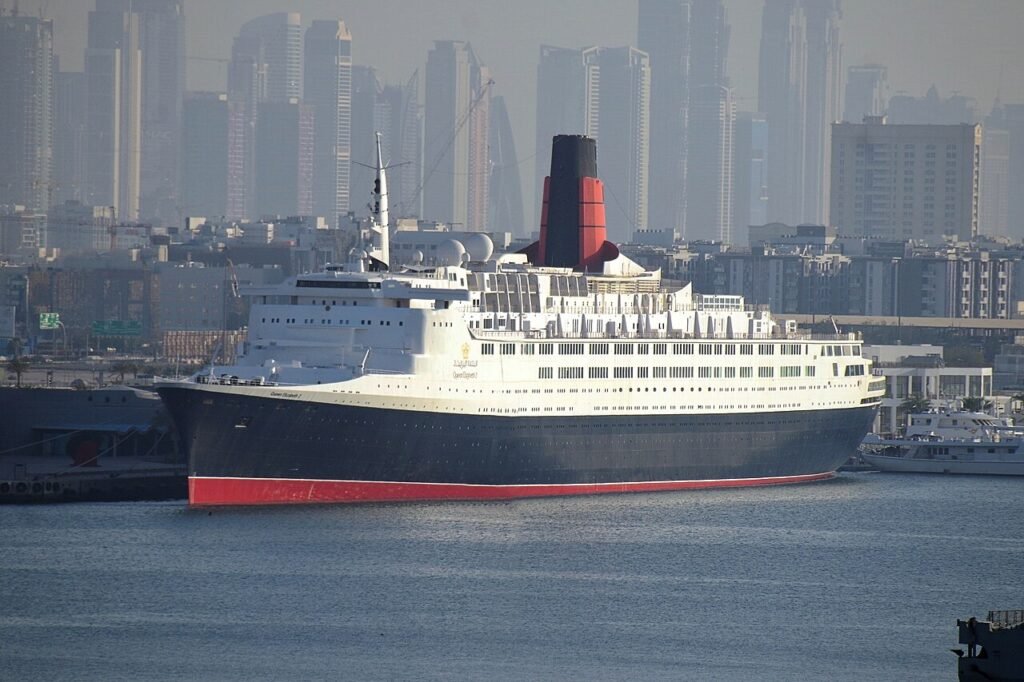
DUQE, by contrast, is a relatively new entrant, launched in June 2022. It operates under the Ports, Customs and Free Zone Corporation (PCFC) and is uniquely situated aboard the Queen Elizabeth 2 (QE2) ship at Mina Rashid in Dubai. This gives DUQE a prestigious Dubai address and a physical proximity to the city’s financial and commercial hubs that RAKEZ cannot offer. DUQE is strictly service and startup-oriented; it does not offer industrial land or warehousing. Its value proposition is built around the modern entrepreneur who requires a Dubai-based ecosystem, a sleek co-working environment, and a highly competitive price point for teams requiring multiple residence visas. While RAKEZ focuses on breadth—from freelancers to massive factories—DUQE focuses on the digital and service-based economy.
The operational focus also dictates setup speed. RAKEZ can issue a licence in about 24 hours; DUQE typically takes 3 to 10 working days for the licence, with full setup including visas running 1 to 2 weeks. That time-to-market gap matters to founders racing a contract deadline, but it is measured in days, while the licence choice is measured in years.
What does each zone cost in Year 1?
The Year 1 costs are the most visible barrier to entry. For a solo founder with no visa requirements—perhaps a digital nomad or a consultant living abroad—the RAKEZ “Biz Starter” package is the clear market leader. At AED 6,000, it provides a trade licence, a flexi-desk or co-working space, and the ability to include up to 10 activities and 50 shareholders. This is less than half the price of the entry-level DUQE package. However, the moment a residence visa is added to the equation, the price gap narrows to almost nothing, and then begins to widen in DUQE’s favor as more visas are added.
The following table illustrates the total Year 1 investment required for both zones across different visa tiers. These figures include the trade licence, lease agreement (virtual or flexi-desk), and the associated visa costs where applicable.
| Visas Included | RAKEZ Year 1 (AED) | DUQE Year 1 (AED) | Cheaper Option | Difference (AED) |
|---|---|---|---|---|
| 0 Visas | 6,000 | 12,500 | RAKEZ | 6,500 |
| 1 Visa | 14,320 | 14,250 | DUQE | 70 |
| 2 Visas | 18,640 | 16,000 | DUQE | 2,640 |
| 3 Visas | No published tier | 17,750 | DUQE | N/A |
| 4 Visas | 27,280 | 19,500 | DUQE | 7,780 |
As the data shows, at the 1-visa mark, the two zones are effectively in a price tie, with DUQE being marginally cheaper by AED 70. This is the pivot point. For a single-person startup, the choice between the two should be based on location and brand rather than cost. But for a founder planning to hire even one employee (the 2-visa tier), DUQE becomes the more economical choice by AED 2,640. By the time a founder reaches the 4-visa tier, the savings at DUQE are enough to cover the cost of a high-end laptop or several months of marketing spend.
Why does the cheaper zone change at one visa?
The reason for the dramatic shift in cost leadership is the “marginal cost of a visa.” In the UAE free zone market, the total price is usually a combination of the licence fee and the visa allocation fee. RAKEZ prices its SME Business Set-Up with a relatively high per-visa cost. Specifically, each additional residence visa at RAKEZ costs AED 4,000. This fee covers the visa processing and the allocation of the quota.
DUQE, however, has adopted a high-volume, low-margin strategy for its visa slots. Each additional visa slot at DUQE costs only AED 1,750. This means that DUQE’s visa add-ons are roughly 2.3 times cheaper than those at RAKEZ. The strategy is aimed squarely at growing teams and small agencies that need to place four to six employees on a Dubai licence.
| Metric | RAKEZ | DUQE |
|---|---|---|
| Cost per additional visa | 4,000 AED | 1,750 AED |
| Activities included | Up to 10 | 3 (1,000+ available) |
| Licence issue time | ~24 hours | 3-10 working days |
| Visa processing time | ~5 business days | 1-2 weeks (full setup) |
Another factor to consider is the bundle composition. The RAKEZ 1-visa package of AED 14,320 is a meticulous breakdown: AED 7,800 for the trade licence, AED 2,200 for the establishment card, AED 4,000 for the residence visa, and AED 320 for basic health insurance. DUQE’s 1-visa package of AED 14,250 is an all-inclusive bundle that includes the lease agreement and the licence. RAKEZ’s itemised pricing shows founders exactly where the money goes, and it also exposes how fast the AED 4,000 visa line compounds across a team.
Compare UAE Freezone costs instantly →
What happens at renewal in Year 2?
The Year 1 setup fee is only the beginning of the financial commitment. A common mistake among founders is failing to model the “renewal” costs for Year 2 and Year 3. This is where the two zones diverge in their administrative logic. RAKEZ offers a very straightforward renewal process: the renewal fee is generally flat and equals the Year 1 licence fee. For the Biz Starter (0 visas), the renewal remains AED 6,000 per year. For the SME Business Set-Up (1 visa), the renewal remains AED 14,320 per year, assuming the visa is still valid.
DUQE’s renewal structure is slightly more complex because it decouples the licence from the establishment card and the residence visa. In Year 2, a DUQE founder will pay between AED 12,500 and AED 14,250 for the licence renewal, plus an establishment card renewal fee of AED 1,750 to AED 2,200. However, the residence visas themselves do not need to be renewed every year. Residence visas in DUQE are renewed every 2 years at a cost of AED 3,500 per person. This means that in Year 2, your costs might actually be lower than Year 1 if no visas are expiring, but in Year 3, you will face a significant spike as all employee visas come up for renewal simultaneously.
Furthermore, DUQE offers an incentive for long-term commitment that RAKEZ currently does not highlight as prominently in its budget tiers: a 15-20% discount if the founder pays for a 2-year or 3-year licence upfront. For a well-funded startup, paying for three years of DUQE licence fees in Year 1 can bring the effective annual cost down significantly, widening the gap even further between DUQE and RAKEZ for multi-visa companies.
| Renewal item | RAKEZ | DUQE |
|---|---|---|
| Licence renewal, 0 visas | AED 6,000/yr | AED 12,500/yr |
| Licence renewal, 1 visa | AED 14,320/yr | AED 14,250/yr |
| Establishment card | Bundled | AED 1,750-2,200/yr |
| Residence visa renewal | Within bundle | AED 3,500 per person every 2 years |
| Multi-year prepay discount | Not published | 15-20% on 2-3 years |
The practical consequence is that RAKEZ is easier to budget and DUQE is cheaper to run at scale. A RAKEZ renewal is one predictable line item. A DUQE renewal is three, and the visa line lands only every other year, so Year 2 and Year 3 totals differ.
Which zone wins on corporate tax and substance?
Since June 2023, the introduction of Corporate Tax in the UAE has changed the way free zones are evaluated. Both RAKEZ and DUQE fall under the same federal tax regime. A company in either zone can potentially qualify as a “Qualifying Free Zone Person” (QFZP), which allows them to pay 0% corporate tax on qualifying income. This is governed by Article 18 of the Corporate Tax Law and Cabinet Decision No. 100 of 2023.
To maintain this 0% rate, a company must meet five cumulative conditions: maintain adequate substance in the free zone, derive qualifying income, not elect to be subject to the standard 9% rate, comply with transfer pricing rules, and—most importantly for small firms—have audited financial statements. The “adequate substance” requirement means you must have enough staff and assets physically located in the zone to carry out your core income-generating activities. This is where the choice of zone matters. Showing substance in Ras Al Khaimah (RAKEZ) is often cheaper because office rents and staff salaries are lower than in Dubai. However, if your “substance” requires frequent client interaction, a Dubai-based substance at DUQE might be more defensible to tax authorities as it aligns with the reality of your business operations.
Both zones are subject to the de minimis limit for non-qualifying income. This rule states that a QFZP’s non-qualifying revenue must not exceed the lower of 5% of total revenue or AED 5 million. If a company fails any of the QFZP conditions, it loses its 0% tax status for that tax period and the four following years, defaulting to the standard 9% rate on all taxable income above AED 375,000. Therefore, the choice between RAKEZ and DUQE should also consider where you can more easily and affordably maintain the “substance” required to protect your tax-exempt status.
The verdict: which budget licence costs less?
The analytical verdict on “which budget licence costs less” is not a single name, but a conditional recommendation based on your company’s headcount and industry. There is no one-size-fits-all winner in this comparison, as the pricing models are designed to capture two very different types of entrepreneurs.
RAKEZ is the recommended winner for:
Individual freelancers, remote consultants, and digital nomads who do not require a UAE residence visa. At AED 6,000 for Year 1 and the same for renewal, RAKEZ is unbeatable for those who simply need a legal entity to invoice international clients. It is also the only choice for founders in the industrial, manufacturing, or heavy warehousing sectors, as DUQE offers no facilities for physical goods — see our RAKEZ vs JAFZA industrial comparison if that is your sector. If you need a licence in 24 hours to meet a contract deadline, RAKEZ is your best bet.
DUQE is the recommended winner for:
Startups and service-based agencies that plan to have a team of 2 to 6 people. The marginal savings on visa costs (AED 1,750 at DUQE vs AED 4,000 at RAKEZ) make DUQE the mathematically superior choice for any growing team. Furthermore, DUQE is the winner for founders who prioritize a Dubai brand and address. Being based at Mina Rashid provides a level of networking and proximity to the Dubai ecosystem that a Ras Al Khaimah licence cannot provide, even if the RAK licence is technically “cheaper” at the 0-visa level. Founders weighing DUQE against other Dubai zones should also read our DUQE vs IFZA cost comparison.
In summary, if you are a solo operator with no visa needs, RAKEZ will save you AED 6,500 in Year 1. If you are a team of four, DUQE will save you AED 7,780 in Year 1. The decision should be driven by your hiring plan for the next 24 months. Start at RAKEZ with 0 visas and hire three people later, and you pay a premium on every one of those visas. Model your headcount first; the cost-effective choice follows from it.
Frequently Asked Questions
Can I upgrade my RAKEZ Biz Starter to a visa-inclusive package later?
Yes. RAKEZ allows licence amendments, but you pay the difference in licence category plus the establishment card and visa processing fees. If you know a visa is coming within six months, starting on the SME Business Set-Up is usually cheaper than amending later.
Does DUQE offer physical office spaces or only co-working?
DUQE primarily focuses on flexible desk solutions and co-working spaces aboard the QE2. While they provide a lease agreement that is valid for licensing and bank account opening, they do not offer large-scale private offices or industrial warehouses. If your business requires significant physical square footage or specialized facilities, RAKEZ’s industrial zones would be a more appropriate fit than DUQE’s startup-centric environment.
Which zone is better for opening a corporate bank account?
Generally, banks in the UAE look more favorably on Dubai-based licences, which gives DUQE a slight advantage. However, RAKEZ is a very well-known and respected “Tier 1” free zone, and most major UAE banks have established processes for RAKEZ companies. The ease of bank account opening often depends more on the founder’s nationality, the business activity, and the clarity of the business plan than on the specific zone itself.
What are the hidden costs of renewal at DUQE?
The main one is that DUQE separates the licence fee from the establishment card and visa fees. Year 1 is bundled, but Year 2 bills the licence (up to AED 14,250) and the establishment card (up to AED 2,200) separately, plus AED 3,500 per visa every two years. RAKEZ renewal pricing is more all-in and easier to forecast.
Is the 24-hour licence issuance at RAKEZ guaranteed?
While RAKEZ is famous for its “24-hour” turnaround, this applies to the issuance of the trade licence itself after all documents have been submitted and approved. It does not include the time required for external approvals (if your activity requires them) or the subsequent visa processing. Visa processing at RAKEZ typically takes an additional 5 business days for employment visas and 9 business days for dependent visas.
Can I have 50 shareholders in a DUQE company?
DUQE is designed for startups and generally accommodates a standard number of shareholders typical for small businesses. RAKEZ specifically markets its ability to handle up to 50 shareholders under the Biz Starter and SME packages, making it a superior choice for large investment groups or syndicated startups. If you have a complex cap table with dozens of individuals, RAKEZ’s administrative framework is better equipped to handle the documentation.