Bottom line: Securing a free zone security deposit refund in the UAE requires navigating strict administrative procedures, explicit claim deadlines, and mandatory fee deductions. While lease deposits and visa guarantees are legally refundable, free zone authorities and immigration departments deduct processing fees, outstanding fines, and cancellation charges before returning funds. Businesses often confuse recurring annual administrative fees with refundable deposits, leading to unrealistic exit recovery expectations. Claiming your money back demands full operational clearance, active portal submissions, and complete tax de-registration.
What Are Free Zone Security Deposits and How Do They Work?
A free zone security deposit is a capital guarantee held by either the free zone authority or the General Directorate of Residency and Foreigners Affairs (GDRFA). Its purpose is to hedge against corporate defaults, unpaid tenancy obligations, employee absconding, and government fines. They sit on the authority’s books as liabilities, not revenue – but claiming them back requires completing the full exit workflow.
Deposit requirements fall into three primary categories: commercial real estate leases, company establishment files, and employee residency visas. Each jurisdiction maintains separate rules regarding what money is collected, where it is held, and under what conditions it is returned.
Deposit categories across UAE free zones
Deposit demands track the operational model. In physical office setups, tenancy security deposits dominate the initial outlay. In flexi-desk or virtual setups, immigration file guarantees are the main deposit. The authority holds the money so a business that defaults on fees or abandons premises can be recovered against without litigation.
How immigration and GDRFA deposits function
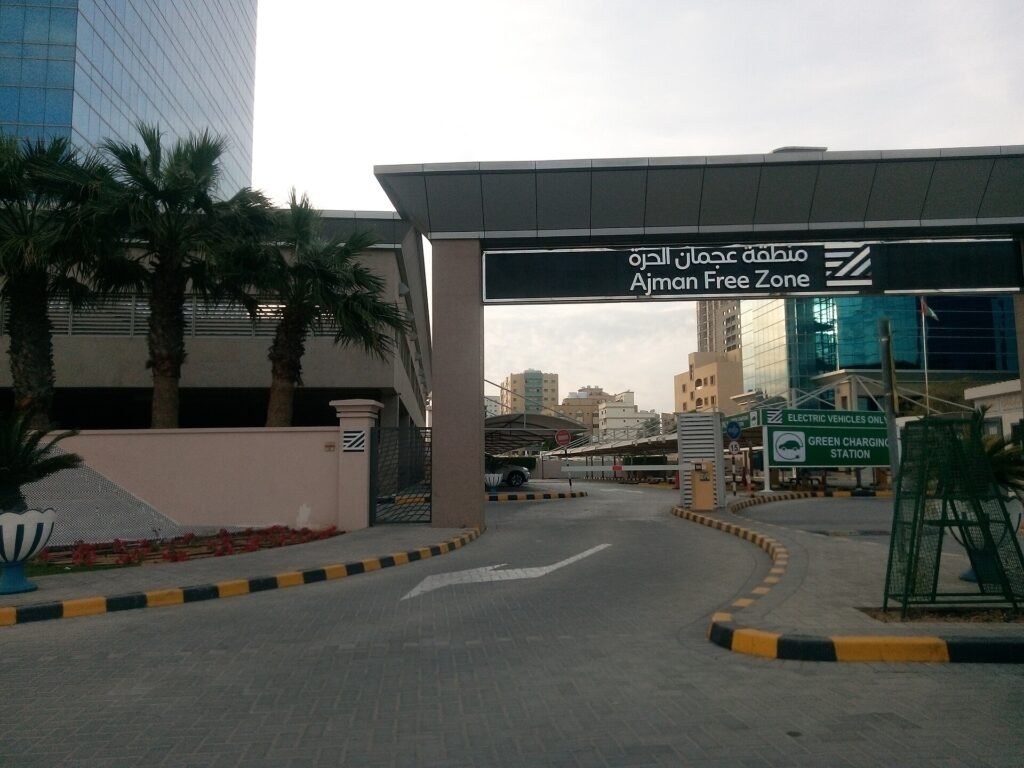
Immigration deposits sit at two levels: the corporate establishment file and the individual employee visa. At company level, a security hold is required before an establishment card is issued or portal services are enabled. Ajman Free Zone, for example, requires a refundable AED 5,000 deposit per company sponsor. This money is held directly by GDRFA and is returned only when the company establishment file is formally cancelled.
In Dubai, the electronic immigration system (Dubai e-channel) requires an initial registration fee of approximately AED 2,500 alongside a refundable company-level security deposit of approximately AED 5,000. For individual employment visas, deposits average AED 3,000 per worker, though specific high-risk visa categories demand higher security sums. These funds safeguard the government against absconding risks, repatriation airfare costs, and unpaid overstay fines.
Lease security deposits in physical and flexi-desk spaces
Physical commercial leases incur separate security guarantees managed by the free zone real estate department. In Dubai Multi Commodities Centre (DMCC), the standard lease security deposit is fixed at 10% of the total lease amount. This deposit is explicitly refundable and held against lease obligations, physical damage to the property, and outstanding utility bills. Flexi-desk and virtual package licenses generally do not require property security deposits, but they enforce higher non-refundable license charges.
| Free Zone Jurisdiction | Deposit / Fee Line Item | Published Cost (AED) | Official Classification |
|---|---|---|---|
| DMCC | Lease Security Deposit | 10% of lease amount | Truly Refundable Deposit |
| DMCC | Company Establishment Card | 1,825 per year | Non-Refundable Annual Fee |
| DMCC | Per-Employee Visa Deposit | Not published | Refundable Deposit |
| Ajman Free Zone | Company Sponsor Deposit (GDRFA) | 5,000 | Truly Refundable Deposit |
| Ajman Free Zone | E-Channel Registration | 2,300 approx | Non-Refundable One-Time Fee |
| RAKEZ | Establishment Card Fee | 2,000 per year | Non-Refundable Annual Fee |
| RAKEZ | Visa Security Deposit | 2,025 approx | Refundable Deposit (Select Visas) |
| Dubai e-Channel | Company Security Deposit | 5,000 approx | Truly Refundable Deposit |
| Dubai e-Channel | Employment Visa Deposit | 3,000 approx | Truly Refundable Deposit |
Which Upfront Charges Are Truly Refundable Versus Non-Refundable Fees?
Separating refundable deposits from non-refundable administration fees is where most exit budgets go wrong. Setup quotes routinely present one total cash figure without flagging that registration charges, platform fees and establishment card fees are never recoverable.
Truly refundable security deposits
A fee is only truly refundable if the free zone regulation or GDRFA mandate explicitly classifies it as a security deposit or escrow hold. Genuine deposits include GDRFA sponsor guarantees, Dubai e-channel company file deposits, individual visa security deposits, and commercial physical lease security deposits. These funds return to the business or individual once the underlying legal obligation ceases, provided no fines or damages exist.
Non-refundable operational and administrative fees
Most initial charges paid during company setup are administrative fees spent on service execution. In DMCC, the annual Company Establishment Card costs AED 1,825 per year. This is purely a government fee and cannot be refunded under any circumstances. Similarly, Ras Al Khaimah Economic Zone (RAKEZ) levies an annual establishment card fee of AED 2,000, which is entirely non-refundable.
Furthermore, initial setup expenses such as name reservation fees, license application fees, registration charges, Memorandum of Association (AOA) drafting fees, and VAT registration processing fees are non-refundable once the authority approves the service. DMCC regulations explicitly state that application, registration, AOA, and VAT fees are non-refundable once service approval is granted. If a company cancels a service mid-way, DMCC levies a standardized service cancellation fee of AED 515, which is deducted from any eligible excess credit balance.
Administrative fees also reduce the net recovery of short-term visas. A standard GDRFA visit-visa security deposit requires AED 1,000. However, GDRFA attaches an AED 20 security deposit service fee and an AED 40 collection and reimbursement fee to the transaction. These two operational fees are charged on top of the deposit and are never returned. The sponsor therefore pays AED 1,060 and recovers AED 1,000, so a clean, on-time departure still carries an unrecoverable AED 60 cost.
Unmasking mis-sold setup costs
Company founders frequently confuse recurring government overhead with holding deposits. When evaluating operational budgets, you must separate recurring obligations like the annual establishment card cost from actual cash deposits. Non-refundable e-channel registration fees, such as Ajman’s one-time AED 2,300 charge or Dubai e-channel’s AED 2,500 registration fee, grant platform access but hold zero cash-back value upon exit.
| Line Item Description | Jurisdiction / Entity | Upfront Outlay (AED) | Net Refund Amount (AED) | Reason for Net Variance |
|---|---|---|---|---|
| Visit Visa Security Deposit | GDRFA / Immigration | 1,060 | 1,000 | AED 20 service fee and AED 40 collection fee non-refundable |
| DMCC Service Cancellation | DMCC Portal | 515 | 0 | Administrative fee deducted from portal balance |
| Ajman E-Channel Registration | Ajman Free Zone | 2,300 approx | 0 | One-time platform setup fee; zero deposit component |
| RAKEZ Visa Deposit | RAKEZ | 2,025 approx | 2,025 | Returned at 100% subject to visa cancellation clearance |
| DMCC Lease Deposit | DMCC Real Estate | 10% of lease | 10% minus repairs | Deductions applied only for property damage or unpaid rent |
What Specific Deductions Reduce Your Refund Amount?
A full free zone security deposit refund is rarely automatic. The zone’s finance department acts as the final clearinghouse and audits the company’s whole ledger before authorising a payout. Anything outstanding to the free zone, immigration, the municipality or third-party vendors is deducted from the balance.
Government and immigration fines
Immigration penalties represent the most immediate line item deducted from visa and company deposits. If an employee overstays their visa, the accumulated daily fines are automatically subtracted from the employment visa security deposit. Late renewal fines levied against corporate files also erode held capital. If a company fails to renew its trade license on time, cumulative fines are offset against available security funds prior to account closure. Business owners must audit late renewal fines by zone to understand how penalty escalation impacts their held balances.
Administrative and processing fees
Free zones charge procedural processing fees to close files and release money. DMCC official schedule of charges explicitly documents their refund philosophy: “All applicable charges will be reimbursed, except cancellation charges and the services rendered.” If an establishment cancels a service request or initiates corporate liquidation, the standard AED 515 cancellation fee, alongside any portal transaction charges, is deducted from the remaining portal balance before issuing a cheque or wire transfer.
Lease reinstatement and property dilapidations
For companies occupying physical offices, warehouses, or light industrial units, lease security deposits are subject to property inspection assessments. Free zone real estate teams inspect premises upon contract expiry. Deductions are levied for:
- Physical structural damage exceeding normal operational wear and tear.
- Failure to reinstate the office layout to its original bare-shell or fitted condition.
- Unpaid utility balances, including DEWA, Empower, or district cooling charges.
- Late key return, or failure to vacate before the formal lease expiry date.
If physical reinstatement costs exceed the 10% lease deposit held by DMCC or another authority, the zone reserves the legal right to withhold trade license cancellation certificates until the remaining balance is settled.
Corporate tax and VAT penalty offsets
Regulatory compliance directly impacts final deposit liquidation. Under UAE tax regulations, companies entering liquidation must complete formal tax deregistration. Missing the mandatory VAT deregistration window within 20 business days of starting liquidation triggers an automatic AED 10,000 fine from the Federal Tax Authority (FTA). Free zone authorities will not release remaining company deposits or grant final clearance until all FTA penalty notices are fully cleared. Calculating the true free zone cancellation cost requires factoring in these potential tax penalty offsets against your deposit balances.
How Long Does the Free Zone Security Deposit Refund Process Take?
Published timelines and settlement reality diverge sharply. Official portals advertise fast processing windows; actual bank clearance depends on finishing the prerequisite clearance steps first.
Official statutory timelines versus practical bank realities
GDRFA published rules state that immigration deposit refunds return to the company’s registered bank account within two working days of approval. However, in practical execution across most UAE jurisdictions, claims land between 7 and 21 working days after visa or establishment file cancellation is verified. The delay stems from cross-departmental verification between immigration databases, customs clearance, and Central Bank processing channels.
Crucially, strict claim windows apply to immigration guarantees. GDRFA rules state that a visa security deposit claim must generally be filed within 30 days of the person’s confirmed departure from the UAE or completion of status change. Failing to submit the claim within this 30-day window can cause system locking, requiring manual intervention and administrative delay.
Portal processing steps and service request workflows
Modern free zones process all monetary claims digitally through dedicated member portals. DMCC handles all corporate financial returns through a centralized service request line. Free zone members must log into the portal and submit service request “522 – Customer Refund”.
This single request code covers three distinct categories of returnable cash:
- Reimbursement of excess portal balance funds.
- Return of visa security deposits on total company termination.
- Release of lease security deposits after lease termination and property handover.
Once submitted, DMCC finance audits the account against outstanding portal fees, deducts any non-refundable cancellation charges, and issues the credit to the verified company bank account.
The impact of company liquidation on refund timing
When closing a free zone company, deposit refunds are the last step, not an early one. Free zone authorities sequence it strictly: refundable deposits are released only after every closure step is complete. The authority will not release visa or lease deposits until the liquidator’s final report is accepted, public newspaper advertisement periods expire, employee end-of-service benefits are confirmed paid, and vendor clearance letters are uploaded.
In setup scenarios where a company utilized a UAE bank guarantee in lieu of a cash security deposit, the free zone will hold the legal guarantee document until all clearance conditions are satisfied. Only then is the physical letter of release issued to the financial institution.
| Refund Request Type | Authority / Jurisdiction | Official Published Timeline | Practical Settlement Reality | Mandatory Prerequisite Step |
|---|---|---|---|---|
| GDRFA Visa Deposit | GDRFA / Immigration | 2 working days post-approval | 7 to 21 working days | File exit proof within 30 days of departure |
| DMCC SR 522 Customer Refund | DMCC Portal | Not published | 10 to 15 business days | Final account balance audit and property sign-off |
| Ajman Sponsor Deposit | Ajman Free Zone / GDRFA | Not published | 14 to 30 business days | Complete cancellation of company establishment file |
| RAKEZ Visa Deposit | RAKEZ Finance | Not published | 10 to 20 business days | Upload of completed UAE visa cancellation proof |
A zone that looks cheap at setup can be the expensive one to leave. Compare UAE free zone costs on uaefreezonecompare.com to see licence fees, refundable immigration deposits, annual establishment charges and exit costs side by side across every major jurisdiction before you commit capital.
How Do Free Zones Compare on Refund Policies and Claim Rules?
The rules differ enough between zones to change how much working capital you should assume is locked up.
DMCC refund policies and member portal rules
DMCC is governed by a published Schedule of Charges, which is what makes it the easiest zone to model. Tenancy deposits are fixed at 10% of the lease amount. DMCC does not publish a separate per-employee visa deposit line item on its public rate card, treating immigration costs within consolidated package services. Operational service fees – including application, registration, AOA drafting, and VAT processing charges – become entirely non-refundable the moment DMCC approves the request.
When exiting or closing services, DMCC enforces a mandatory AED 515 service cancellation fee. All excess credits, lease holds, and visa balances must be recovered using service request “522 – Customer Refund” inside the member portal. Refunds are remitted directly to registered corporate bank accounts; cash disbursements are strictly prohibited.
Ajman Free Zone and RAKEZ deposit recovery
Ajman Free Zone separates platform access charges from sovereign immigration security. The e-channel registration fee of approximately AED 2,300 is a non-refundable one-time operational expense. However, the AED 5,000 company sponsor deposit is held securely by GDRFA. This AED 5,000 sum remains intact and fully recoverable once the establishment file is formally deregistered and closed.
RAKEZ charges an annual Establishment Card fee of AED 2,000, which is non-refundable. For employment visas, RAKEZ requires a refundable deposit of roughly AED 2,025 on specific visa allocations. This money is returned to the company’s RAKEZ portal account once the employee’s visa is properly cancelled, status is changed, or exit from the country is validated by border control.
Dubai e-Channel and GDRFA deposit windows
Dubai’s immigration infrastructure relies on two distinct charges: an e-channel registration fee of approximately AED 2,500 (non-refundable) and a central security deposit of approximately AED 5,000 at the company level (refundable). Individual employment visas processed through Dubai e-channel typically carry security deposits around AED 3,000 per worker, rising higher for specific specialized labor categories.
To recover these sums, companies must monitor departure timing closely. GDRFA enforces strict compliance: refund applications must be submitted within 30 days of the individual’s exit. If an employer misses this window, the refund process requires manual system clearing, leading to extended administrative delays.
Frequently Asked Questions
How do I claim my DMCC security deposit back?
You must submit Service Request 522 – Customer Refund through the DMCC member portal. This request handles excess portal balances, visa deposits upon company termination, and lease security deposits after official lease handover. DMCC deducts any applicable cancellation charges or outstanding service fees before transferring the net funds back to your corporate account.
Why is my visit visa deposit refund less than the original amount paid?
The deposit itself is refunded in full at AED 1,000. What you do not get back are the fees charged alongside it: an AED 20 security deposit service fee and an AED 40 collection and reimbursement fee. Total outlay is AED 1,060 against a AED 1,000 return, so the transaction costs AED 60 even when everything goes right.
What happens to security deposits if a company goes into liquidation?
Free zone authorities release refundable deposits only after every liquidation step is completed. All outstanding fines, employee end-of-service benefits, vendor dues, and tax obligations must be cleared. If you miss the VAT deregistration deadline within 20 business days of liquidation, an AED 10,000 FTA fine will be deducted before any remaining deposit is released.
Are e-channel registration fees refundable when closing an establishment file?
No, e-channel registration fees are non-refundable government portal access charges. For instance, Ajman Free Zone charges approximately AED 2,300 and Dubai e-channel charges around AED 2,500 for initial registration. Only separate, explicit security deposits – such as the AED 5,000 company deposit – are eligible for refund upon formal cancellation of the establishment file.
How long do I have to claim a GDRFA visa deposit refund after an employee leaves?
GDRFA regulations require visa deposit refund claims to be filed within 30 days of the individual’s confirmed departure from the UAE or status change. While system processing takes two working days post-approval, practical bank credit takes between 7 and 21 working days. Missing the claim window can lead to administrative forfeiture.